
BENEFITS AND USES OF HERBS
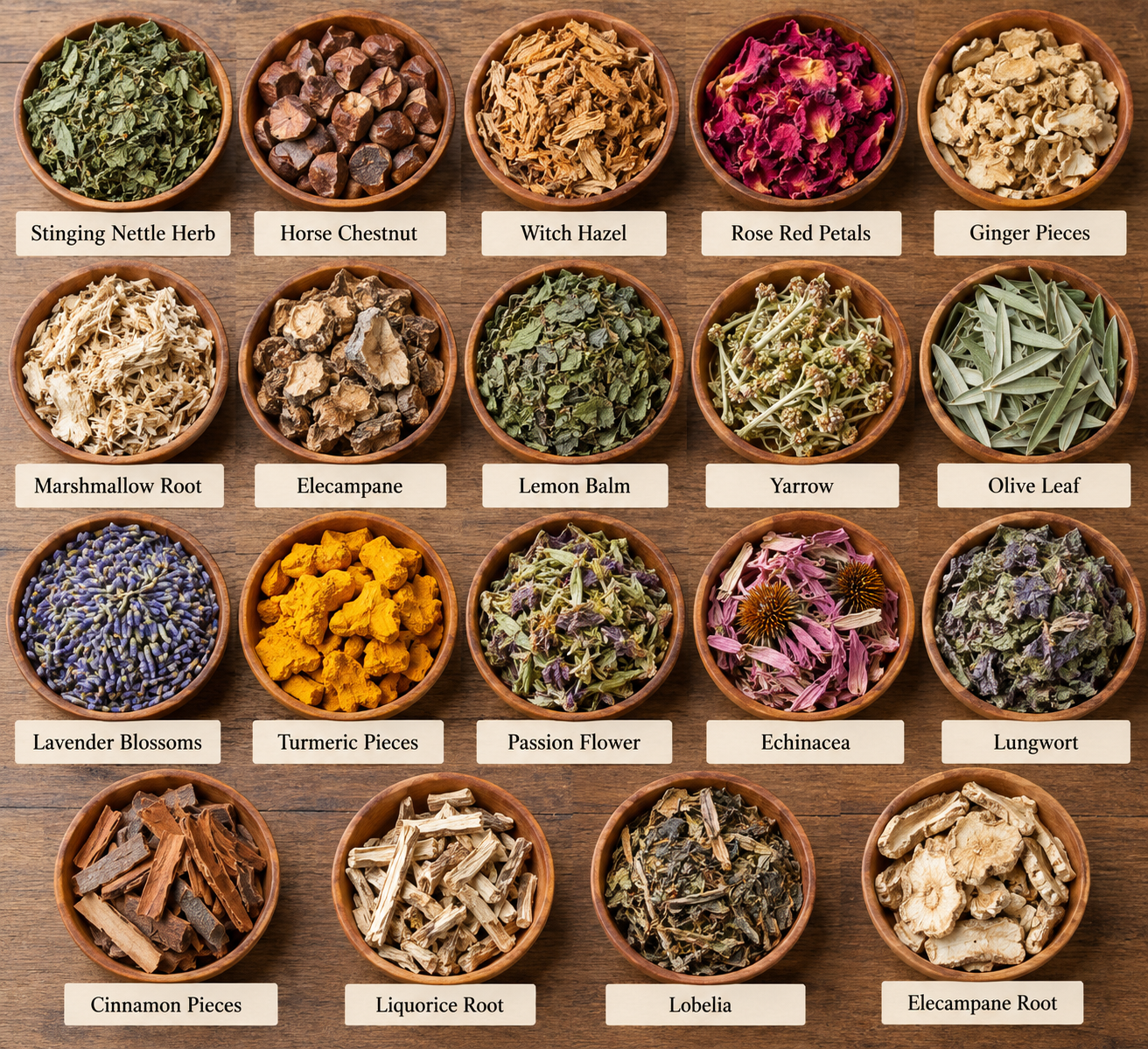
1. Stinging Nettle Herb
Botanical Name: Urtica dioica
Benefits and Uses:
- Traditionally used to support urinary tract function.
- Contains polyphenols and flavonoids with antioxidant properties.
- Traditionally used for joint discomfort and inflammatory complaints.
- Used in some herbal preparations for seasonal allergies, although scientific evidence is limited.
- Commonly prepared as a herbal tea or extract.
Common Uses: Herbal teas, dried herb preparations and topical products.
Caution: May affect blood pressure, blood sugar and fluid balance. Fresh nettle can irritate the skin.
2. Horse Chestnut
Botanical Name: Aesculus hippocastanum
Benefits and Uses:
- Standardised horse chestnut seed extract has evidence for short-term relief of symptoms associated with chronic venous insufficiency.
- May help relieve heavy, tired legs and swelling associated with poor venous circulation.
- Traditionally used in preparations for the appearance of varicose veins.
Common Uses: Standardised topical products and professionally formulated extracts.
Caution: Raw seeds, bark and leaves are toxic. Never consume raw horse chestnut or prepare homemade oral remedies.
3. Witch Hazel
Botanical Name: Hamamelis virginiana
Benefits and Uses:
- Contains tannins with astringent properties.
- Used in skincare products for oily skin.
- May temporarily soothe minor skin irritation.
- Traditionally used in topical preparations for haemorrhoid discomfort.
- Commonly included in skin toners and aftershaves.
Common Uses: Witch hazel distillate, extracts, creams and lotions.
Caution: Alcohol-containing preparations may dry or irritate sensitive skin.
4. Red Rose Petals
Botanical Name: Commonly Rosa gallica or other suitable rose species.
Benefits and Uses:
- Contain antioxidant plant compounds, including polyphenols.
- Traditionally used in soothing herbal teas.
- Add natural colour and fragrance to bath products.
- Used in botanical skincare preparations.
- Suitable for potpourri, sachets and decorative herbal blends.
Common Uses: Herbal infusions, bath soaks, sachets and cosmetic preparations.
Caution: Use correctly identified, pesticide-free petals suitable for the intended application.
5. Ginger Pieces
Botanical Name: Zingiber officinale
Benefits and Uses:
- Well studied for helping relieve certain types of nausea.
- Traditionally used to support digestion.
- May help ease some digestive discomfort and bloating.
- Contains gingerols and related compounds with anti-inflammatory activity.
- Adds a warming flavour to herbal teas and culinary preparations.
Common Uses: Herbal teas, food, tinctures and powdered preparations.
Caution: May worsen heartburn. Concentrated supplements require caution when taking blood-thinning medication.
6. Marshmallow Root
Botanical Name: Althaea officinalis
Benefits and Uses:
- Contains mucilage, which forms a soothing, gel-like substance when mixed with water.
- Traditionally used to soothe dry, irritated throats.
- Used in herbal preparations for mild digestive irritation.
- May soothe minor skin irritation in suitable topical preparations.
Common Uses: Cold-water infusions, herbal teas, syrups and topical products.
Caution: May delay the absorption of oral medicines. Ask a pharmacist about separating its use from medication.
7. Elecampane
Botanical Name: Inula helenium
Benefits and Uses:
- Traditionally used in herbal preparations for coughs and respiratory complaints.
- Contains inulin and other plant compounds.
- Historically used as an expectorant in traditional herbalism.
- The root is the principal plant part used in traditional preparations.
Common Uses: Traditional herbal preparations using the dried root.
Caution: Clinical evidence is limited. May cause allergic reactions in people sensitive to plants in the daisy family. Avoid medicinal use during pregnancy unless advised by a healthcare professional.
8. Lemon Balm
Botanical Name: Melissa officinalis
Benefits and Uses:
- Traditionally used to promote relaxation.
- May help with mild stress and sleep difficulties, although research remains limited.
- Traditionally used for mild digestive discomfort.
- Has a pleasant lemon-like aroma and flavour.
- Popular in calming herbal tea blends.
Common Uses: Herbal teas, tinctures, extracts and suitable topical preparations.
Caution: May cause drowsiness, particularly when combined with sedatives or sleeping medication. Seek professional advice if taking thyroid medication.
9. Yarrow
Botanical Name: Achillea millefolium
Benefits and Uses:
- Traditionally used for mild digestive complaints.
- Used in herbal teas to support appetite and digestion.
- Historically applied externally to minor skin complaints.
- Contains flavonoids and other plant compounds being studied for their biological activity.
Common Uses: Herbal infusions and appropriately formulated topical products.
Caution: Avoid if allergic to plants in the daisy family. Medicinal use may be unsuitable during pregnancy and may interact with blood-thinning medication.
10. Olive Leaf
Botanical Name: Olea europaea
Benefits and Uses:
- Contains oleuropein and other polyphenols with antioxidant activity.
- Has been studied for possible effects on blood pressure.
- Some research suggests potential effects on blood sugar and cardiovascular risk factors.
- Traditionally used in herbal preparations for general wellness.
Common Uses: Herbal teas, capsules, tinctures and extracts.
Caution: May lower blood pressure or blood sugar. Consult a healthcare professional before using concentrated extracts if taking medication for either condition.
11. Lavender Blossoms
Botanical Name: Commonly Lavandula angustifolia
Benefits and Uses:
- Traditionally used to promote relaxation.
- Lavender aromatherapy may help some people with anxiety or sleep-related discomfort.
- Used in calming herbal teas.
- Adds a pleasant floral aroma to bath products and sachets.
- Popular in aromatherapy and relaxation products.
Common Uses: Dried blossoms, bath products, sachets and aromatherapy preparations.
Caution: May cause allergic skin reactions. Essential oil is concentrated and should not be swallowed unless specifically intended for that use under appropriate professional guidance.
12. Turmeric Pieces
Botanical Name: Curcuma longa
Benefits and Uses:
- Contains curcuminoids, including curcumin, studied for anti-inflammatory activity.
- Traditionally used to support digestion.
- Studied for possible relief of some types of joint discomfort.
- Widely used in cooking and traditional herbal systems.
- Provides natural yellow-orange colour in suitable preparations.
Common Uses: Culinary preparations, herbal teas, powders and standardised extracts.
Caution: May worsen reflux or stomach upset. Concentrated supplements may interact with medicines and require caution in people with gallbladder or bile duct disorders.
13. Passion Flower
Botanical Name: Passiflora incarnata
Benefits and Uses:
- Traditionally used for mild nervous tension and restlessness.
- May help some people with anxiety symptoms, but evidence is limited.
- Traditionally used in preparations intended to support sleep.
- Often included in calming herbal blends.
Common Uses: Herbal teas, tinctures and standardised extracts.
Caution: Can cause drowsiness. Do not combine with sleeping tablets, sedatives or alcohol without medical advice.
14. Echinacea
Botanical Name: Commonly Echinacea purpurea or Echinacea angustifolia
Benefits and Uses:
- Traditionally used in preparations for the common cold.
- Some studies suggest certain preparations may modestly reduce the likelihood or duration of colds, but findings are inconsistent.
- Contains plant compounds studied for their effects on immune responses.
- Commonly included in seasonal wellness products.
Common Uses: Herbal teas, tinctures, capsules and extracts.
Caution: May cause allergic reactions, especially in people sensitive to the daisy family. Consult a healthcare professional if you have an autoimmune condition or take immunosuppressant medication.
15. Lungwort
Botanical Name: Pulmonaria officinalis
Benefits and Uses:
- Traditionally used in European herbalism for coughs and respiratory complaints.
- Historically associated with soothing preparations for the throat.
- Contains tannins and other plant compounds.
- Its traditional name reflects historical beliefs about lung health, not proof that it treats lung disease.
Common Uses: Traditional herbal preparations.
Caution: Scientific evidence supporting medicinal benefits is inadequate. Some species may contain pyrrolizidine alkaloids that can damage the liver. Do not consume internally unless the species and preparation’s safety have been established.
16. Cinnamon Pieces
Botanical Name: Cinnamomum species
Benefits and Uses:
- Traditionally used to support digestion.
- Adds a warming flavour to herbal teas and food.
- Contains aromatic compounds and polyphenols.
- Studied for possible effects on blood sugar, although it is not a substitute for diabetes treatment.
- Commonly used in warming herbal blends.
Common Uses: Herbal infusions, cooking and spice blends.
Caution: Cassia cinnamon can contain substantial amounts of coumarin, which may damage the liver in excessive amounts over time. Ceylon cinnamon generally contains much less coumarin.
17. Liquorice Root
Botanical Name: Glycyrrhiza glabra
Benefits and Uses:
- Traditionally used to soothe throat irritation and coughs.
- Contains glycyrrhizin and other compounds studied for biological activity.
- Traditionally used in preparations for digestive discomfort.
- Adds a naturally sweet flavour to herbal teas and blends.
Common Uses: Herbal teas, flavouring and professionally formulated extracts.
Caution: Glycyrrhizin can raise blood pressure, lower potassium levels and cause fluid retention or abnormal heart rhythms. It can interact with several medicines. Avoid regular medicinal use without professional advice, especially if you have high blood pressure or heart or kidney problems.
18. Lobelia
Botanical Name: Lobelia inflata
Traditional Benefits and Uses:
- Historically used in traditional herbalism for respiratory complaints.
- Traditionally described as an expectorant.
- Contains lobeline and other alkaloids that affect the nervous system.
Common Uses: Historical herbal preparations; modern medicinal use is limited by safety concerns.
Caution: Lobelia can be toxic. It may cause nausea, vomiting, dizziness, breathing difficulties and serious poisoning. Do not use homemade oral preparations or recommend self-treatment with this herb.
19. Elecampane Root
Botanical Name: Inula helenium
Benefits and Uses:
- Traditionally used for coughs and respiratory complaints.
- Contains inulin, a naturally occurring carbohydrate, and other plant compounds.
- Historically described as an expectorant.
- The root is the main part traditionally used in herbal preparations.
Common Uses: Dried root in traditional herbal preparations.
Caution: Evidence for medicinal benefits is limited. May cause allergic reactions in people sensitive to the daisy family. Avoid medicinal use during pregnancy unless advised by a healthcare professional.
Note: Elecampane and elecampane root refer to the same herb when the root is the plant part supplied.
QUICK REFERENCE GUIDE
| Herb | Main Traditional Uses |
|---|---|
| Stinging nettle | Urinary support and joint discomfort |
| Horse chestnut | Venous circulation and heavy legs |
| Witch hazel | Astringent skincare |
| Red rose petals | Herbal infusions and skincare |
| Ginger pieces | Nausea and digestive support |
| Marshmallow root | Soothing throat and digestive irritation |
| Elecampane | Traditional respiratory preparations |
| Lemon balm | Relaxation and mild stress |
| Yarrow | Digestive support |
| Olive leaf | General wellness; studied for blood pressure |
| Lavender blossoms | Relaxation and aromatherapy |
| Turmeric pieces | Joint discomfort and digestive support |
| Passion flower | Nervous tension and sleep support |
| Echinacea | Common-cold preparations |
| Lungwort | Traditional respiratory use |
| Cinnamon pieces | Digestive support and flavouring |
| Liquorice root | Throat soothing and traditional digestive use |
| Lobelia | Historical respiratory use; significant toxicity concerns |
| Elecampane root | Traditional respiratory preparations |
IMPORTANT INFORMATION FOR HERBALISTS
Traditional use does not necessarily mean an herb has been proven effective in clinical studies. When using herbs in products for sale, ensure the correct plant species and plant part are identified, and consider the extraction method, dosage, stability and intended use.
Cosmetic products should not make unsubstantiated medicinal claims. Always consider possible contraindications, medication interactions and appropriate safety precautions before recommending herbs for internal use.
| Weight | 2 kg |
|---|---|
| Dimensions | 20 × 20 × 20 cm |
| Herbs | Peppermint 60g, Horsechestmut 100g, Witchhazel 100g, Rose red Petals 60g, Ginger Pieces 60g, Marshmallow root 75g, Elecampange 75g, Lemon Balm 60g, Yarrow 100g, Olive Leave 75g, Lavender Blossom 75g, Turmeric pieeces 100g, Passion Flower Herb 75g, Echinacea Herb 60g, Lungwort, Cinnamon Pieces 75g, Liquorice root 100g, Lobelia 75g |
Be the first to review “Dried Herbs Full Catalogue”
Related products

Herbs

Natural Medicine

Herbs

Dried Herbs

Natural Medicine


Natural Medicine
Reviews
There are no reviews yet.